 :
:
Their Names Are Now in Space: Harbin Institute of Technology’s Bayi-04 Satellite Launches Successfully
Aug,28 2026
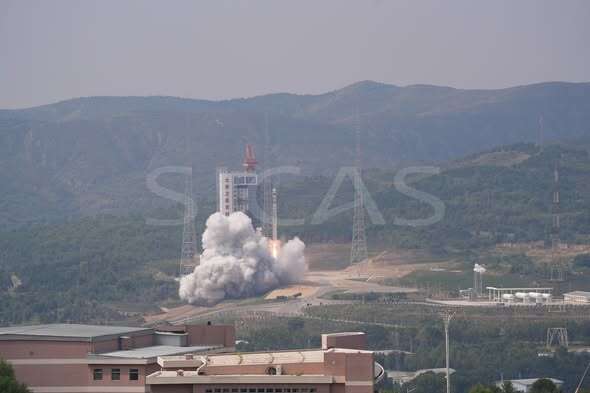
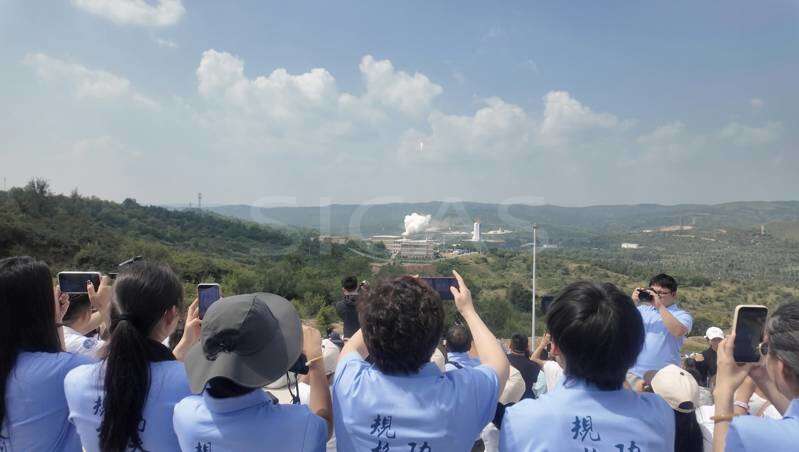
On 25 August 2026, at 11:21 am Beijing time (GMT+8), the Bayi-04 satellite, named ‘Harbin’, has been successfully launched from the Taiyuan Satellite Launch Centre aboard a Long March-6C carrier rocket. The satellite has entered its designated orbit, and its solar panels have been deployed as planned, marking the mission’s success.
Developed by Harbin Institute of Technology (HIT), the satellite, weighing approximately 18.7 kg, is now operating in a sun-synchronous orbit at an altitude of around 500 kilometres. It carries several science payloads, including a science education display screen, high-definition camera, micro camera and polarisation camera.
The project has also involved students from 77 primary and secondary schools in Harbin, who have participated in different stages of the satellite development under the guidance of HIT’s satellite research and development team.
For the university community, however, one detail has stood out. The names of all undergraduate students admitted to Harbin Institute of Technology in 2025 have been engraved on the satellite’s structure. Their names have now travelled into space.
About Harbin Institute of Technology
Harbin Institute of Technology (HIT) was founded in 1920 and is one of China’s leading universities for science, engineering and advanced technology.
HIT has been included in Project 985 and Project 211 and is a member of the C9 League. It is also commonly recognised as one of China’s ‘Seven Sons of National Defence’. These university groupings and designations continue to be widely recognised when Chinese higher education is discussed.
HIT has developed strong academic and research strengths in mechanical engineering, aerospace engineering, computer science, electrical engineering and related fields. Its research has also extended into technologies that have become increasingly important to modern industry, including industrial robotics, artificial intelligence, intelligent manufacturing and new energy vehicles.
For international students choosing a degree, the relationship between an academic discipline and a specific technology can be important. The technology a student wants to work with does not always appear as the exact title of an undergraduate programme.
A student who wants to study robotics in China, for example, may find relevant programmes through Mechanical Engineering, Automation, Electrical Engineering or Computer Science. At HIT, research teams have also worked extensively in robotics and intelligent systems, giving students in related disciplines a strong connection to the field.
Students interested in artificial intelligence can explore Computer Science, Automation and related programmes. Those interested in electric vehicles and intelligent manufacturing can consider Mechanical Engineering, Electrical Engineering, Materials Science and other relevant fields.
Study in China at Harbin Institute of Technology
For international students planning to study in China, Harbin Institute of Technology is an option worth exploring when comparing universities for engineering and technology.
Students looking to study Aerospace Engineering in China can consider HIT because of its long-standing involvement in aerospace research. Those interested in Mechanical Engineering, Computer Science, Electrical Engineering, robotics or artificial intelligence can also explore relevant programmes and research areas.
Students preparing to apply to Chinese universities should check the admission requirements for international students before selecting a programme. Requirements can include academic qualifications, language proficiency, entrance examinations, application documents and other programme-specific conditions.
Tuition fees and scholarships are also important considerations. Students looking for scholarships to study in China can check the funding opportunities available to international students at HIT and confirm the eligibility requirements for their intended degree and intake.
When choosing where to study in China, students should consider the full picture: programme content, teaching language, admission requirements, tuition fees, scholarships, research strengths and practical opportunities.
Ready to Apply to Harbin Institute of Technology?
If Harbin Institute of Technology matches your academic interests, you can start preparing your application through SICAS.
Begin by exploring the programmes available in your field and checking the admission requirements for international students. You can also review tuition fees and scholarship opportunities for your intended degree and intake.
Whether you are planning to study Aerospace Engineering in China, Mechanical Engineering, Computer Science, Electrical Engineering or another technology-related field, checking the programme requirements early can help you prepare your documents and meet the application deadline.
When you are ready to apply, submit your application to Harbin Institute of Technology through SICAS and take the next step towards studying in China.