 :
:
How Learning Chinese Is Bringing Kyrgyz Youth Closer to China
Aug,31 2026
For some young people in Kyrgyzstan, China has gradually become less distant.
Chinese language classrooms in Bishkek have been attracting students, while Chinese restaurants, films, cars, social media and online shopping have become increasingly familiar parts of everyday life.
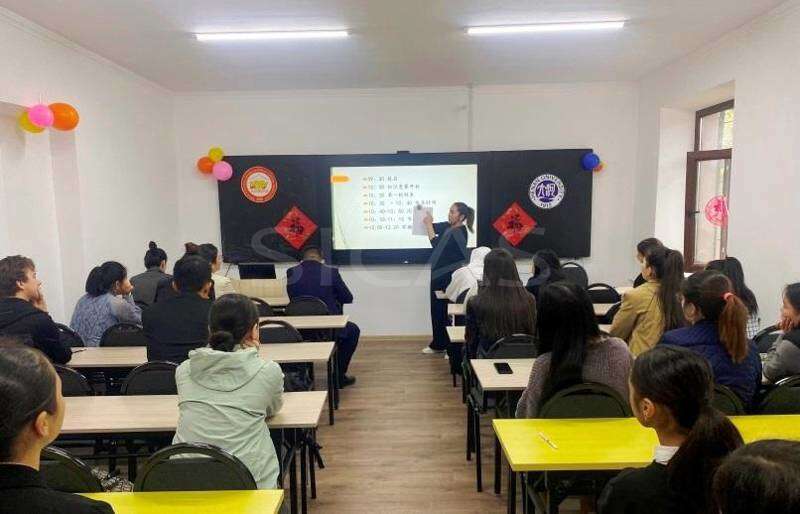
For five young people studying at the Confucius Institute at Bishkek State University, learning Chinese has also become a way of getting to know the country behind the language.
Their experiences were reported by People’s Daily Online on August 30, 2026.
Editor’s note: The students’ names have been changed for privacy. The experiences described in this article are based on the People’s Daily Online report published on August 30, 2026. Original photographs and other identifying materials from the source report have not been reproduced here.
Five students, five ways of seeing China
Aida: “I grew into it”
Aida had not originally planned to study Chinese. Her uncle encouraged her to learn the language because China and Kyrgyzstan were becoming more closely connected, and Chinese could be useful for her future career.
Her teacher gave her a Chinese name. At first, she did not like it. The characters looked cramped to her, “like a little mountain”.
Five years later, the name feels natural to her.
“I grew into it,” she says. “The name, the language, and then China.”
Today, Aida reads Chinese web novels, follows Chinese television and hopes to subtitle more Chinese programmes for audiences in Kyrgyzstan. She would also like to work in an embassy and help build a cultural bridge between the two countries.
Nuray: From learning Chinese to studying in China
Nuray first chose Chinese out of curiosity. Her interest has since taken her beyond the classroom.
This September, she will begin a master’s degree at Zhejiang University, studying international Chinese language education.
Shanghai was her first stop in China. She remembers being impressed by its modern and international atmosphere.
After returning to Bishkek, she noticed more Chinese visitors, restaurants, shops and supermarkets. Chinese electric cars had also become increasingly common.
“You can meet Chinese people at the bank and in the mall,” she says.
For Nuray, learning the language has also meant learning more about how people live. She believes that Chinese films can sometimes explain a country’s habits more quickly than a classroom can.
Aigerim: Chinese as a future career
Aigerim has studied Chinese for four years. She chose the language because China had become increasingly important to her future studies and career.
Chinese music and social media have become part of her everyday life. She listens to Jay Chou and uses platforms such as WeChat and Xiaohongshu, while Chinese e-commerce has also become familiar.
She hopes to become a translator and contribute to communication between Kyrgyzstan and China.
Bek: Discovering traditional Chinese culture
For Bek, learning Chinese has been closely connected with traditional culture.
He has developed a particular interest in Chinese calligraphy and can recite Li Bai’s “Invitation to Wine”.
“Chinese calligraphy is fascinating,” he says. “There is always another style.”
Chinese products, cars and e-commerce have also become increasingly ordinary in Bishkek. His ambition is to become a translator who can carry meaning accurately from one language into another.

Umut: From “too hard” to travelling across China
Umut initially did not want to learn Chinese.
“I didn’t want to learn Chinese. It looked too hard,” she says.
After choosing Chinese as her major, however, she gradually became interested in the language. Last year, she reached the global finals of the Chinese Bridge Chinese language proficiency competition and travelled to several places in China.
She has since visited cities including Beijing, Fuzhou, Guangzhou, Chengdu, Shenzhen, Shanghai and Zhangjiajie.
Chengdu became her favourite.
“People there know how to enjoy life,” she says, describing the city’s relaxed pace and everyday atmosphere.
From learning Chinese to studying in China
The five stories have followed different paths, but they share a common starting point: learning a language has given them a closer look at the country behind it.
For some, Chinese has become connected with future careers in translation or diplomacy. For others, it has opened an interest in literature, traditional culture, media and travel.
For Nuray, the next step has been to study in China herself, beginning postgraduate study at Zhejiang University.
Her experience also reflects one of the ways international students may approach education in China. Students can study Chinese language and culture, pursue undergraduate or postgraduate degrees, or explore other academic fields at Chinese universities. Depending on the university and programme, scholarships for international students may also be available.
For these five young people, however, the journey began with something much simpler: a language class in Bishkek.
Learning Chinese has gradually changed what China means to them — from a distant neighbour into a place they can read about, visit, study and, in some cases, hope to work with.
Perhaps that is what a language can do at its best: bring a country closer, one word at a time.
About SICAS
SICAS (Study In China Admission System) is a platform for international students interested in studying in China. It provides information on Chinese universities, degree programmes, scholarships and admission requirements, helping students explore study opportunities across China.
Read More
WZU Selected as a Typical Case in 2025 "Study in China"